
Lunary vs Langfuse
Connect the customer experience to the code behind it. Compare Lunary and Langfuse for tracing, prompts and deployment.
$20 per user / month. Payment required to activate your workspace.
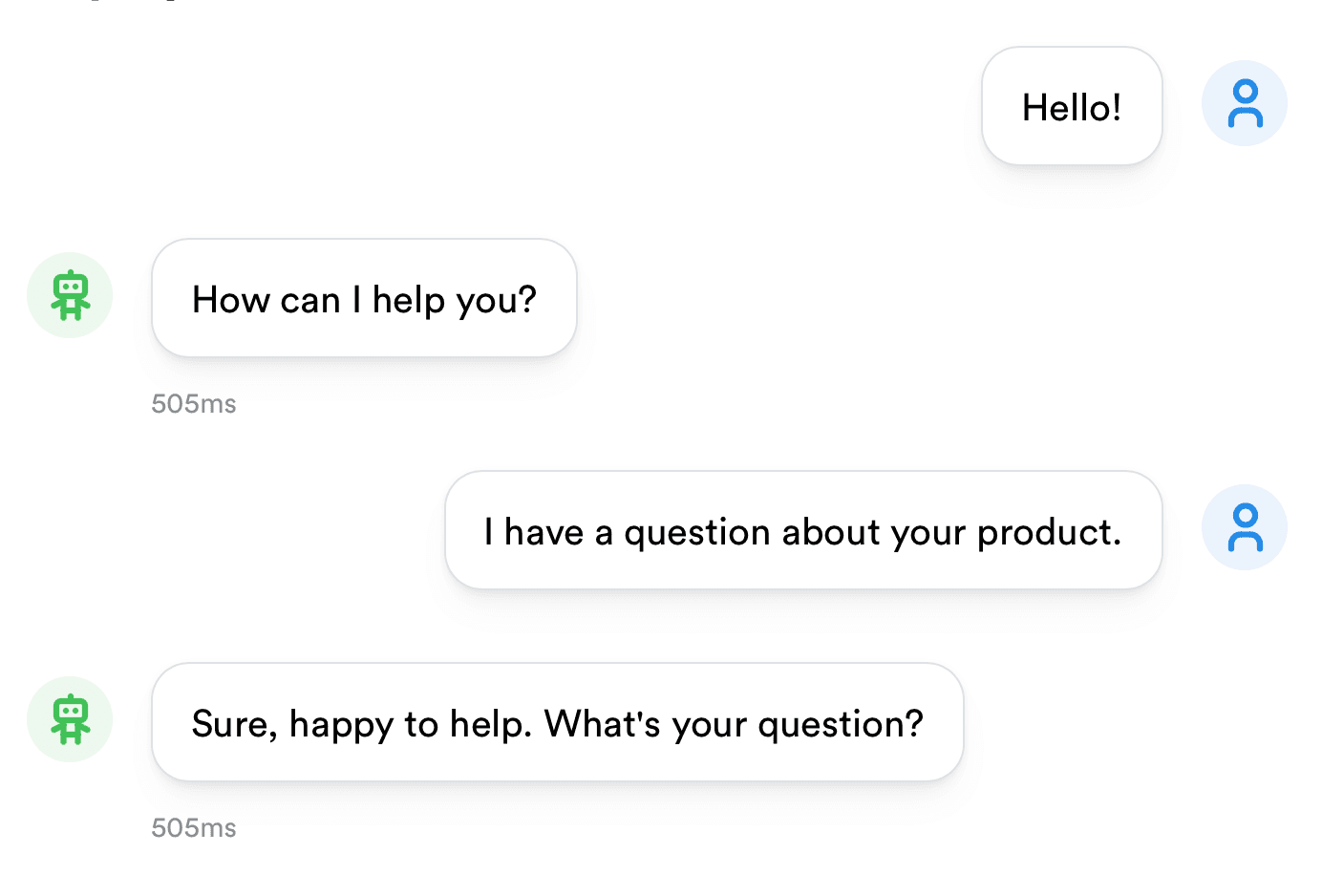
Choose Lunary when engineers and product teams need to investigate the same customer issue. Conversation replay, feedback and linked traces give both teams a shared starting point.
Shared context
Review customer messages and the runs behind them together.
Feedback you can investigate
Attach reactions to messages or runs and filter the results.
A place to improve prompts
Store, version and test prompts with your teammates.
At a glance
| Area | Lunary | Langfuse |
|---|---|---|
| Workflow to test | Conversation → application trace → prompt | Trace → score → dataset experiment |
| Prompt management | Templates and playground | Versioned prompts and SDK retrieval |
| Self-hosting | Documented deployment guides | Documented open-source deployment guides |
| Public MCP capability | Documentation search and reading | Documentation and separate data access server |
| Historical move | Explicit field mapping and dataset import | Filtered UI and blob-storage export options |
See your workflow in Lunary.
Explore conversations, traces and prompt versions with our team.
Choose the review workflow
Follow the same failed task in both tools. Compare how an engineer finds the cause and how a product reviewer understands the customer experience.
MCP access differs
Langfuse has a data MCP server. Lunary’s public MCP server searches and reads documentation; it cannot query production traces or call the Lunary API.
Compare the full operating cost
For managed hosting, use your volume, retention and seats. For self-hosting, also compare feature editions, upgrades, capacity and backup recovery.
Questions & answers
Does Langfuse offer prompts and user context?
Yes. Both belong in your comparison of the actual review workflow.
Can Lunary Docs MCP query my traces?
No. It provides read-only developer documentation, not project data access.
By Lunary · Documentation reviewed Sep 16, 2026
Sources & methodology (10)
Based on vendor documentation, not an independent benchmark or hands-on rating. Features and plans can change.
Bring your next AI issue to Lunary.
Follow the conversation. Find the cause. Test the fix.
$20 per user / month. Payment required to activate your workspace.